D&D Character Art Commission Prices 2026 — Real Studio Guide
I've been fielding the same question almost every week since I opened commissions: "How much does D&D character art actually cost?" And every time, I watch people wade through a swamp of outdated Reddit threads, affiliate sites with no actual price data, and AI-generated "commission guides" written by people who have never held a stylus. So here's the straightforward version — real prices, real turnaround times, from a studio that has been doing this since 2024. No guessing, no padding, no upsell disguised as a guide.
Why D&D Commission Prices Are All Over the Place
The short answer is that "character art" covers an enormous range of skill levels, tools, and time investment. A hobbyist on their third month of digital painting and a professional illustrator with a decade of experience are both listed under the same search results. That's genuinely confusing if you don't know what to look for.
Then there's the AI problem. There are shops — some with slick websites and fast turnarounds — charging $5 to $20 for "hand-painted" portraits that are a Midjourney output with a color grade slapped on top. Those aren't commissions. They're printouts. And they're dragging down price expectations for everyone doing actual work.
Hand-painted digital art takes time. A solid bust portrait, done properly with real line work, color theory, lighting passes, and texture work, takes me between 4 and 8 focused hours depending on complexity. A full-body piece with detailed armor can push 15 to 20 hours. When you see a "full character" for $15, someone is either using AI, rushing so badly the work shows it, or losing money. None of those outcomes are good for you as the client.
The price you pay for a commission reflects the hours of human skill behind it. If the math doesn't work out, the art isn't what it claims to be.
Commission Types and What They Cost
Here's the current price list for Design Vortex character work. These are the numbers I actually charge — not ranges pulled from a survey.
| Commission Type | Price Range | Turnaround | |---|---|---| | Character bust portrait | $60–$80 | 5–10 days | | Half-body character art | $90–$120 | 7–14 days | | Full-body character art | $120–$180 | 7–14 days | | Reference sheet (character + expressions + outfits) | $250–$450 | Custom | | VTT token (single) | $40–$60 | 5–10 days | | VTT token pack (5) | $180 | 5–10 days | | NPC pack of 5 | $220 ($44 each) | Custom | | NPC pack of 10 | $400 ($40 each) | Custom | | Party portrait (group scene) | $80–$120 per character | 14–21 days |
The full breakdown with add-ons lives on the pricing page. But this table covers the majority of what people actually order.
A few things worth noting. The reference sheet range is wide — $250 is a fairly simple character with clean outfits, while $450 is a complex character with layered armor, multiple expression variants, and outfit swaps. I'll always give you a fixed quote before you commit. The party portrait is priced per character in the scene because the composition, lighting, and interaction effects scale with the headcount in ways that aren't linear.
What Makes a Commission More Expensive
Not every character is the same amount of work. Here's what actually moves the needle on price.
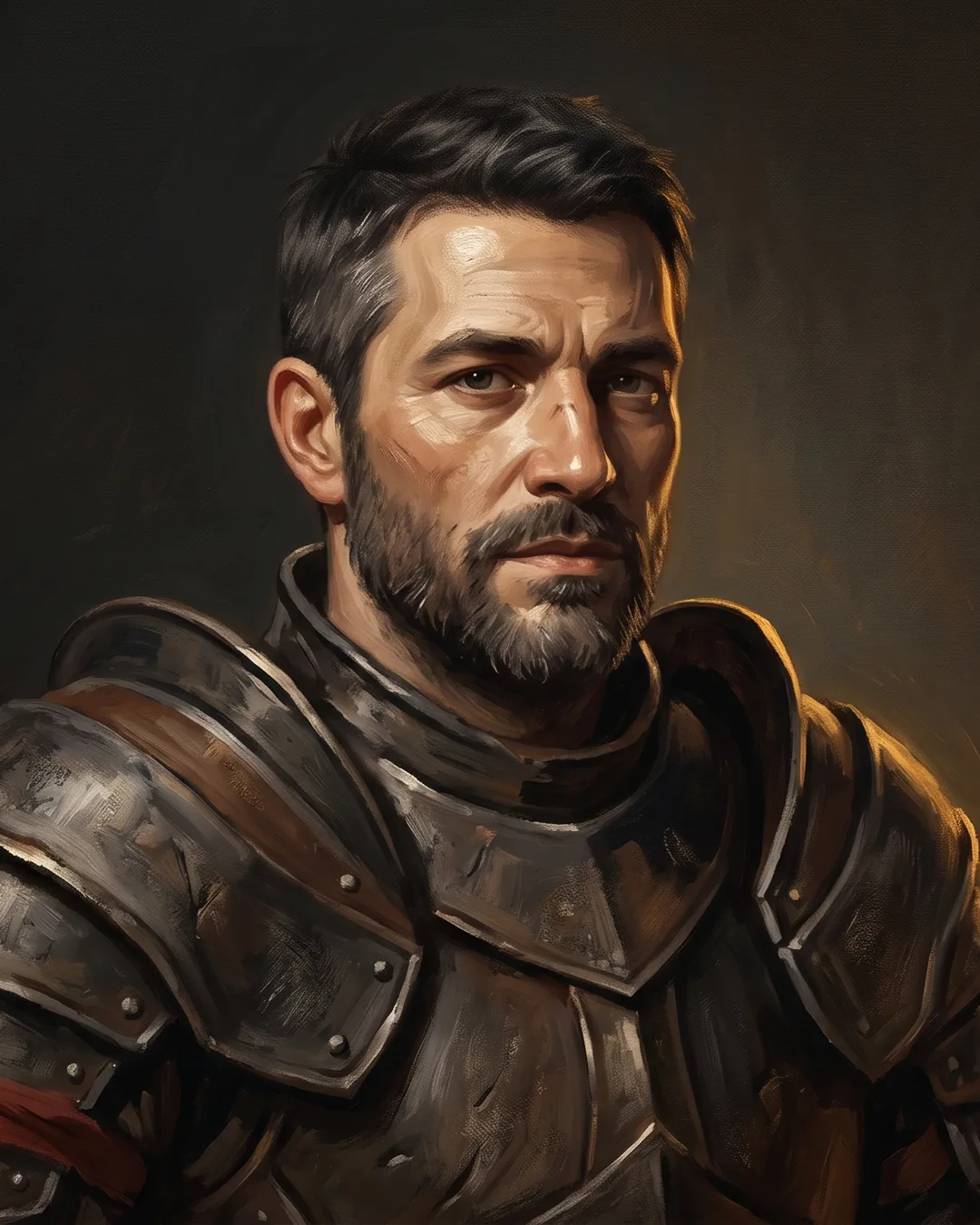
Armor and mechanical complexity. A wizard in robes is genuinely faster to paint than a paladin in full plate with custom heraldry. Each pauldron, visor, and layered metal piece requires separate rendering passes. I don't charge for this arbitrarily — it's a real time difference of several hours on a detailed armored build.
Number of characters in one piece. Anything beyond a single character involves additional composition planning, consistent lighting across multiple subjects, and significantly more rendering time. Party portraits are priced per character for exactly this reason.
Background inclusion. Most of the base prices on my services page assume a simple gradient or atmospheric background. A full illustrated environment — a tavern, a dungeon chamber, a battlefield — is a separate scope of work and will be quoted accordingly.
Rush delivery. My standard turnarounds are listed above. If you need something faster, I can sometimes accommodate it, but that costs extra because it means pushing other client work. I'm upfront about this at the quote stage. I won't promise a rush I can't deliver.
Commercial licensing. If you're using the art for a published product — a TTRPG supplement, a Kickstarter campaign, a commercial video game — the commercial licensing add-on is +40% of the base price. Personal use (your own character, VTT avatar, printing for yourself) is included in the standard rate. If you're unsure whether your use case qualifies, the FAQ covers this in detail, or just ask when you submit your brief.
What You Actually Get
I want to be specific here because "what's included" varies enormously between studios and it matters when you're comparing prices.
Every commission at Design Vortex includes 4K resolution final files in PNG format, suitable for print, VTT use, or high-resolution display. You're not getting a web-resolution JPEG. If you ever need to reprint or resize, the file holds up.
Revisions are included. The number depends on the tier, but the goal is always that you're happy with the final piece — not that I hit a revision limit and call it done. I do a sketch approval stage before moving to full color, so major changes can be caught early when they're easy to fix rather than late when they're expensive to redo.
Process updates are part of the workflow. You'll see the sketch, you'll see the color rough, and you'll see the final before I send the high-res file. This isn't just a courtesy — it's a practical checkpoint system that protects both of us. Clients who see the work in stages end up much happier with the final result because surprises are essentially eliminated.
The payment structure is a 30% deposit upfront to hold your spot and cover the sketch phase, with the remaining 70% due on delivery after you've approved the final. You never pay the full amount before you've seen the finished work.
Red Flags: When the Price Looks Too Good
There are specific patterns worth knowing, because I've seen clients come to me after being burned.
No portfolio or a very thin one. Any studio doing legitimate commission work for more than a few months should have a substantial body of completed work they can show you. If the portfolio is three pieces or is suspiciously uniform in style, be cautious. You can browse the Design Vortex portfolio and see the actual range and consistency of finished work.
AI-generated art sold as hand-painted. There are tells: identical texture patterns across different pieces, hands and fingers that don't quite work anatomically, text in the image that dissolves into nonsense, or a general smoothness that looks rendered rather than painted. Ask the artist directly if the work is 100% hand-made. A legitimate artist will say yes without hesitation.
No deposit policy. Reputable studios take a deposit. It protects the artist's time and signals that the client is serious. A studio that takes zero upfront and promises to start immediately is either very new, has no queue, or is in a model that doesn't involve much actual time per piece.
No revisions offered. If a shop delivers the art and considers the transaction complete regardless of whether you're satisfied, that's a red flag. Revisions are standard in professional commission work.
Fast, cheap, and hand-painted are three things that don't coexist. Pick two and ask yourself which two this studio is actually offering.
The Subscription Option
For DMs running ongoing campaigns or players building out a world over time, I offer monthly subscription tiers rather than one-off commissions.
The Companion plan is $75/month and covers regular personal use — character updates, session recaps, ongoing creative work. The GM plan is $150/month for game masters managing NPC rosters, location art, and world-building assets at higher volume.
Both plans require a 6-month minimum because the economics only work if I can plan my capacity around it. If you're running a long campaign and expect to need consistent art, the per-piece savings are significant. The pricing page has the full scope of what each tier covers.
How the Quote Process Works
You submit a brief through the order page. The brief asks for your character concept, reference images if you have them, the commission type you're interested in, and any specific requirements around timeline or usage. It takes about five minutes to fill out well, and the more detail you include upfront, the more accurate the quote.
I review briefs and respond with a quote within 48 hours, usually faster. The quote is fixed — it doesn't change unless your brief changes. Once you approve the quote, you pay the 30% deposit and I add you to the active queue.
There's no obligation when you submit a brief. Getting a quote costs nothing. If the number doesn't work for your budget, that's fine — I'd rather you know upfront than feel stuck after paying a deposit.
The full price list is on the pricing page if you want all the numbers in one place. If you're ready to talk about your character, the order page is where to start.